MiniMax H3 视频提示:官方结构
概述
MiniMax H3 从一个提示生成带声音的视频。有四个任务:T2VA 从文本构建完整视听时间线;I2VA 从第一帧开始向前发展;FL2VA 从第一帧到最后一帧;L2VA 从合理的早期状态收敛到最后一帧。提示主体对四个任务都一样。三个图像任务在前面加一行指令。
完成的提示有两部分:指令行(仅图像任务),一空行,然后是三个核心字段 integrated_multimodal_description、overall_soundscape 和 non_diegetic_music,每个字段单独一段,用英文写。里面的每个细节都必须是观众能看到或听到的。
本指南把官方文档浓缩成参考表、写作顺序、官方示例和常见错误规则。上面链接的源文档是权威,若有差异以它为准。
参考
名称 | 类型 | 含义 |
|---|---|---|
integrated_multimodal_description | core field | 时间线,逐镜头描述:视觉风格、构图、主体及其位置、场景和道具、动作和反应、切换、摄像机移动、发言人、对话、唱歌及其对应的片内声音。 |
overall_soundscape | core field | 1 到 4 句组成的一段话:整个视频的环境声、物理动作声和非语言人声(风、雨、交通、脚步、布料、撞击、呼吸、笑声)。不包括对话、唱歌或片内音乐。只有用户要求完全静音时写 N/A。 |
non_diegetic_music | core field | 1 到 3 句关于配乐的描述,只有观众能听到:乐器、节奏、律动和动态变化。不写情绪词,也不解释情感作用。无配乐时写 N/A。 |
I2VA instruction | first line | 对于目标视频,目标视频的 0.00 秒处,<Picture 1>(来自 [Shot 1])被完全参考。 |
FL2VA instruction | first line | 参考图片如何与目标视频对齐——图片 1(来自镜头 1)与目标视频的 0.00 秒对齐;图片 2(来自镜头 N)与目标视频的 S.SS 秒对齐。 |
L2VA instruction | first line | 参考图片如何与目标视频对齐——<Picture 1>(来自 [Shot N])与目标视频的 S.SS 秒对齐。N 是真实最后镜头的索引;S.SS 是视频长度,保留两位小数。 |
[Shot 1] | shot marker | 开头描述。无时间戳。以整体风格开头(电影感、实拍、2D 动画、3D CG、黏土动画、水彩、复古胶片)和第一构图。 |
[Shot 2] At 00:03.500, the camera cuts to ... | shot marker | 后续每个镜头:顺序编号和视频长度内严格递增的切换时间,然后是切换短语和新镜头内容。 |
(S1), (S2), (S1,S2) | speaker ID | 每个说话、唱歌或画外音的主体的稳定 ID;跨镜头保持一致;多个编号发言人一起发声时用复合 ID。不发声的角色无 ID。 |
<d>[English] ... </d> | dialogue tag | 只写语言标签和准确的原话,保留所有原词和标点。说话者、动作和语气不写在标签内。 |
"..." | on-screen text | 任何真正可见的横幅、标牌、标签、字幕或霓虹灯文字,用英文双引号,逐字不译。 |
camera motion | phrase | 运动类型,只有重要时写幅度和速度,作为镜头内自然动作写:摄像机以小幅度慢速推向她手中的折叠信。 |
says in an off-screen voiceover | fixed phrase | 画外音唯一用词。紧跟 <d> 标签后说明画面中角色嘴唇完全闭合。 |
分步操作
- 选任务。T2VA 直接写三个核心字段。I2VA、FL2VA 和 L2VA 先写对齐指令行,空一行,再写字段。N 是最后镜头索引,S.SS 是保留两位小数的有效时长。
- 开头写 [Shot 1],写风格和初始构图。图像任务从参考图取风格,保持身份、服装、颜色、关键物品和空间关系一致;T2VA 从请求中选风格。
- 沿时间线写剩余描述:主体外观和位置、场景和关键道具、动作和反应、镜头切换、说话内容和同步的片内声音。不要写看不到或听不到的内容。
- 只有新镜头带来主体、空间、状态、视角或时间的新信息时才切换。镜头编号按顺序,后续镜头以严格递增的切换时间开头。只有距离或轻微角度变化时用摄像机移动代替切换。
- 摄像机移动写成动作:运动类型,只有重要时写小幅度或大幅度,慢速或快速。中等幅度和正常速度省略。
- 首次出现的声音写清身份保持稳定(角色类型、年龄、性别、画内外、音高、音色、语速、口音)和 ID。把准确话语放 <d>[English] ... </d> 内,保留标点,绝不翻译或改写。
- 画外音用固定短语 says in an off-screen voiceover,紧跟标签后说明对应画面角色嘴唇完全闭合。
- 对话或歌词跨镜头时,两个部分都标记,说明音频跨镜头连续(无缝跨镜头、无中断进入下一镜头、从前一镜头延续、过渡中仍可听见)。视频结尾截断的语音也标记。
- 屏幕可见文字用双引号写,完全照原文。
- overall_soundscape 写 1 到 4 句一段,描述整个视频的环境声、动作声和非语言人声。对话、唱歌和角色听到的音乐已在描述中,不要重复。
- non_diegetic_music 写 1 到 3 句,描述乐器、节奏、律动和动态,或写 N/A。广播、电视、电话音乐和现场唱歌是片内声音,写在描述里。
- 图像任务按推荐流程写。I2VA:第一帧锚定、动作开始、持续发展、结果或反应。FL2VA:第一帧状态、可见中间变化、逐渐缩小差异、最后帧状态,通常一镜头。L2VA:合理的前置状态、明确动作和过渡路径、最终镜头逐渐收敛、最后帧落点。
示例
摄像机移动写成动作
The camera pushes in with small amplitude at slow speed toward the folded letter in her hands.
The camera pans right with large amplitude at fast speed, revealing the open doorway.
The camera holds a static shot as the runner exits the frame.
发言人、对话和画外音
The young woman with a quiet, breathy voice (S1) says: <d>[English] I get off at the next station.</d>
The two children (S1,S2) shout together, <d>[English] Wait for us!</d>
The man (S1) says in an off-screen voiceover: <d>[English] I still remember that road.</d> while his lips remain completely closed.
A red neon sign reading "营业中" glows above the doorway.
案例 1:T2VA(纯文本)
integrated_multimodal_description: [Shot 1] Live-action, cinematic, a medium-wide shot frames a baker opening the shutters of a small street bakery before sunrise. The camera pushes in with small amplitude at slow speed as the middle-aged baker with a calm, slightly raspy voice (S1) places a fresh loaf on the wooden counter and says: <d>[English] First batch of the morning.</d> [Shot 2] At 00:05.000, the camera cuts to a close-up of steam rising from the sliced bread while the baker's final words carry over from the previous shot.
overall_soundscape: Wooden shutters scrape open over a quiet street as trays clink softly inside the bakery. The doorbell rings once, followed by light footsteps and the crisp sound of bread being sliced.
non_diegetic_music: A soft acoustic-guitar pattern at a moderate tempo, joined by sparse upright-bass notes and a gentle fade at the end.
案例 2:I2VA(第一帧)
For the target video, at 0.00 seconds into the target video, <Picture 1> (from [Shot 1]) is fully referenced.
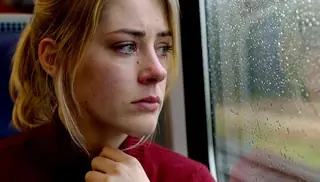
integrated_multimodal_description: [Shot 1] Live-action, cinematic, the young woman shown in <Picture 1> remains beside the rain-covered train window, preserving her appearance, clothing, seat position, and the carriage layout. The camera trucks right with small amplitude at slow speed as she lifts her gaze from the folded letter toward the passing city lights. Her reflection moves across the glass while the quiet, breathy young woman (S1) says: <d>[English] I get off at the next station.</d> She folds the letter along its existing crease.
overall_soundscape: The train wheels produce a steady metallic rhythm beneath a low ventilation hum. Rain ticks against the window while paper rustles softly in her hands.
non_diegetic_music: Sustained cello notes at a slow tempo with widely spaced piano tones, gradually decreasing in volume.
案例 3:FL2VA(首尾帧,一段八秒镜头)
How the reference pictures align with the target video — Picture 1 (from Shot 1) aligns with the 0.00-second mark of the target video; Picture 2 (from Shot 1) aligns with the 8.00-second mark of the target video.
integrated_multimodal_description: [Shot 1] Live-action, cinematic, a rain-soaked cyclist begins in the position and framing established by Picture 1, holding a closed black umbrella beside a silver bicycle. The camera pulls out with small amplitude at slow speed as she releases the bicycle handle, raises the umbrella above her shoulder, and presses the runner upward until the canopy opens. Water rolls from the expanding fabric while she steps beneath it, rotates the handle into the final angle, and settles into the pose, spacing, and composition established by Picture 2 at the end of the shot.
overall_soundscape: Rain falls steadily on the pavement, followed by the metallic click of the umbrella runner and the soft snap of the canopy opening. Water drips from the bicycle frame as distant traffic passes.
non_diegetic_music: N/A
案例 4:L2VA(最后一帧,一段六秒镜头)
How the reference pictures align with the target video — <Picture 1> (from [Shot 1]) aligns with the 6.00-second mark of the target video.
integrated_multimodal_description: [Shot 1] Live-action, cinematic, a close shot begins with an intact drinking glass near the edge of a dark wooden table, while the same hand and sleeve visible in <Picture 1> approach from the right. The camera pushes in with small amplitude at slow speed as the fingertips strike the rim. The glass tips, falls, and hits the floor with a sharp impact; cracks spread through it as fragments slide outward. Toward the end, the moving pieces lose momentum and settle into the exact broken arrangement, hand position, camera angle, lighting, and final composition established by <Picture 1>.
overall_soundscape: Fingertips tap the glass before it scrapes across the tabletop, falls, and breaks with a sharp crash. Small fragments scatter and gradually stop sliding across the floor.
non_diegetic_music: A low electronic pulse at a slow tempo, ending immediately after the glass breaks.
技巧
- 指南提到的运动类型:Zoom In / Zoom Out(焦距变,摄像机静止)、Push In / Pull Out(摄像机前后移动)、Pan Left / Right(镜头水平旋转)、Truck Left / Right(摄像机横向滑动)、Tilt Up / Down(镜头垂直旋转)、Pedestal Up / Down(摄像机整体升降)、Arc Shot、Tracking Shot、Static Shot、Shake Slightly / Shake Strongly、POV、Roll Clockwise / Counterclockwise。幅度:with small amplitude,with large amplitude。速度:at slow speed,at fast speed。
- 切换用词:the camera cuts to,the shot cuts to,the shot transitions to,the shot changes to,the shot switches to。交叉溶解、淡入淡出和擦除只在用户要求时用。
- FL2VA 偏好单镜头让模型连续插值;只有明确指定时用多个镜头,且最后帧必须由最后镜头达到。
- L2VA 中图片属于最后镜头,不属于镜头 1。起点是合理能通向它的早期状态。
- 音乐字段写乐器、速度、节奏和动态。不要写情绪词和配乐想让观众感受什么。
- 与动作相关的声音写在动作描述旁,音景是整个视频的总结,不是第二个剧本。
- 指令和字段之间空一行,字段之间也空一行,完全照官方示例。
问题排查
视频未落在最后一帧
原因
FL2VA 或 L2VA 中参考图片被描述为静态图像,或在早期镜头达到,或对齐时间与视频实际长度不符。
修复方法
写连接状态的运动路径,而不是两段描述,让收敛发生在最终的 [Shot N],并把 S.SS 对齐时间设为保留两位小数的有效时长。
画外音时嘴唇动了
原因
画外音未用准确短语标记,或 <d> 标签后缺少嘴唇闭合说明。
修复方法
用 says in an off-screen voiceover,紧跟标签后说明画面角色嘴唇完全闭合。
说话内容被改写、翻译或填充
原因
语气说明或描述写进了 <d> 标签,或话语被改写而非逐字写出。
修复方法
<d>[English] ... </d> 内只保留语言标签和准确话语及标点;说话者身份、动作和语气写在标签外。
切换感觉随意或镜头顺序错乱
原因
切换无新信息,切换时间缺失或不递增,或第一镜头有时间戳。
修复方法
[Shot 1] 无时间戳;后续镜头以严格递增的切换时间开头并带切换短语;小幅重构用摄像机移动代替切换。
配乐泛泛或重复对话
原因
non_diegetic_music 中有情绪词,或 overall_soundscape 重复了对话和唱歌。
修复方法
音乐字段描述乐器、节奏、律动和动态;音景只写环境声、动作声和非语言人声。
常见问题
第一镜头需要时间戳吗?
不需要。[Shot 1] 不带时间。后续镜头以严格递增且在视频长度内的切换时间开头,比如 [Shot 2] At 00:03.500, the camera cuts to ...
对话标签里写什么?
只写语言标签和准确的原话,保留所有原词和标点。说话者身份、ID、动作和语气写在标签外。
没人说话怎么办?
没人说话的角色无发言人 ID。音景仍描述环境声和动作声;完全静音的视频写 N/A。
FL2VA 可以有多个镜头吗?
只有用户明确要求时才有。单镜头让模型从第一帧连续插值到最后帧;无论多少镜头,最后帧必须由最后镜头达到。
角色能听到的音乐放哪?
广播、电视、电话音乐、乐器和唱歌是片内声音,写在 integrated_multimodal_description。non_diegetic_music 只写观众听到的配乐。
参考音频和语音克隆有格式吗?
有。全参考模式有 MiniMax 参考指南里的六部分格式,链接见下。Mark White 的音频提示指南讲如何绑定参考声音到发言人。
链接与来源
- MiniMax's official video prompt writing guide (base tasks)
- MiniMax's reference-mode prompt writing guide
- MiniMax H3 model card on Hugging Face
本指南涉及的模型
作者
掌舵这艘船。对 VAE 解码时间有很多没人问过的看法。相信权重应该是自由的,任何你下载不了的模型都是带额外步骤的订阅。不接受关于 NAS 上 400 GB 检查点的问题。
Captain 的所有指南
相关指南
MiniMax H3 提示指南:文本转视频、图片转视频、参考视频和音频
2026年9月20日
ComfyUI 节点:文档和故障排除
2026年6月2日

Wan 2.2 视频:文本到视频和图像到视频的设置、参数及 LoRA
2026年5月24日